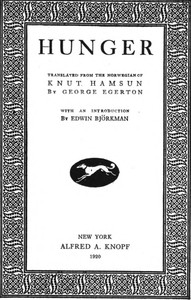
File Reader: Hunger
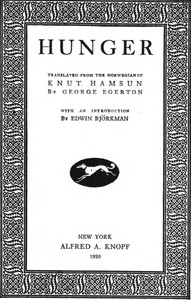
"Hunger" by Knut Hamsun is a striking exploration of existential despair and the struggle for identity amidst societal indifference. Set in the bustling streets of Oslo at the turn of the 20th century, the novel captures the psyche of a starving writer grappling with poverty and isolation. Hamsun's acute observations of human behavior and the intricacies of mental anguish resonate deeply, making this work a significant precursor to modernist literature.
The Story
The narrative follows Hans Nielsen Hauge, an aspiring author whose relentless pursuit of artistic success is thwarted by his deteriorating mental and physical state. As he oscillates between moments of clarity and delusion, Hauge's experiences reflect the harsh realities of urban life, where hunger extends beyond the physical and seeps into the essence of existence. The thin line between sanity and madness is explored as he encounters various characters who embody the stark contrasts of society's classes.
The themes of alienation, existential crisis, and the relentless pursuit of creative fulfillment permeate the text. Hamsun employs a stream-of-consciousness style, immersing readers in Hauge's fragmented thoughts and sensations, effectively capturing the rawness of his experience.
Why You Should Read It
- Exploration of the Human Condition: Hamsun's portrayal of hunger transcends the physical to probe deeper existential questions.
- Innovative Narrative Style: The stream-of-consciousness technique offers an intimate glimpse into the protagonist's psyche.
- Historical Context: Written during a time of social upheaval, the novel reflects the anxieties of early 20th-century life in Norway.
- Complex Characters: Hauge's interactions reveal the multifaceted nature of human relationships in times of despair.
- Influence on Modern Literature: Hamsun's work paved the way for future writers, impacting the development of psychological realism.